
Sold, never transferred
Of 710 trucking companies sold on the grey market, 85% never changed hands on the federal record. Same officers, same name, same DOT. The money moved; FMCSA never heard about it. What's for sale isn't a company — it's the silence in the registration record.
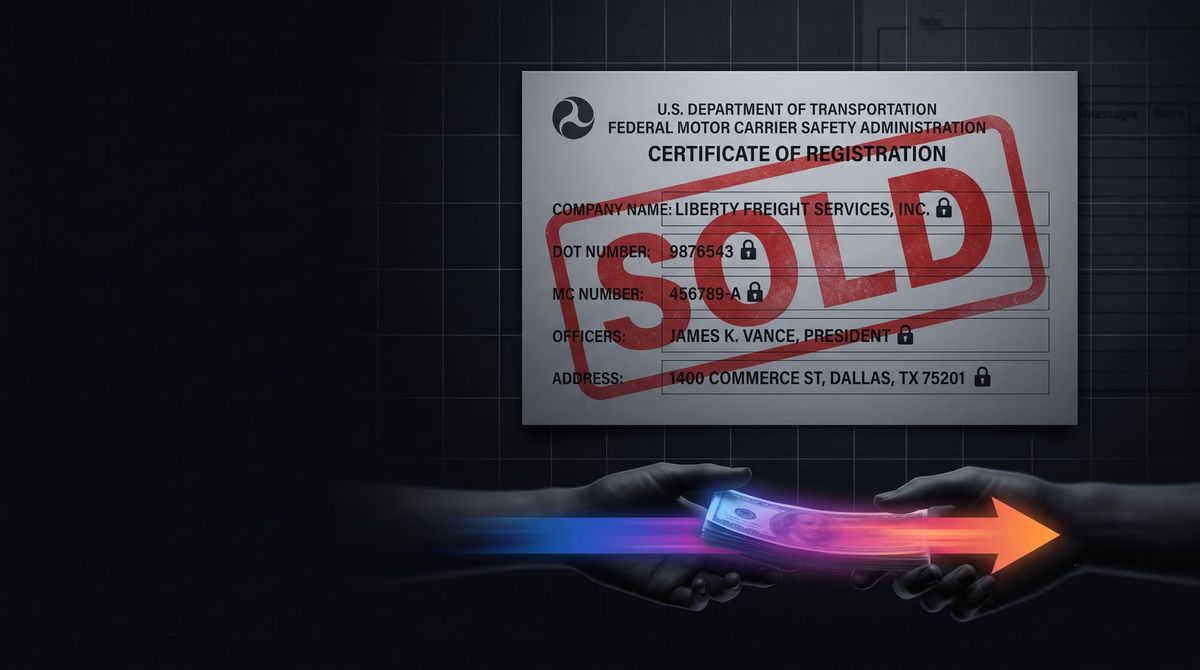
What the federal record says about the trucking companies changing hands on the grey market
Part 2 of an investigation into the grey market for FMCSA operating authority. Figures and methodology at the end; all numbers are computed from scraped listings matched to the federal record.
Part 1 ended on a puzzle we couldn't resolve from listings alone. The most valuable thing trading on these markets isn't a truck or even a clean inspection history. It's access: an active seat in a major freight program, the kind that takes months to earn and is tied to one specific company. And that access is widely understood not to survive a change of ownership. Transfer the company and the program re-checks you, so the seat resets to zero.
So either buyers are paying thousands for something that evaporates the moment they take over, or the sale is never reported and the company, on paper, never changes hands at all.
It's the second one. We pulled every grey-market listing marked sold, matched each one to the carrier's federal file, and looked at what actually moved on the record. For roughly 85% of them, nothing did. Same officers, same legal name, same DOT and MC number. The money changed hands. The company, as far as FMCSA knows, did not.
That gap is the product.
1. The seat is the asset
Strip one of these companies down to what actually trades, and you're left with one thing of value: a live seat in a freight program's gate, most often Amazon's. Everything else is commodity.
You can see it in the price. Hold the carrier constant and the asking price doesn't drift, it steps. On Telegram, an authority advertised with a live Amazon seat asks a median of $24,000. The same kind of authority with a suspended seat asks $11,000. With no seat at all, $10,000, the bare price of the paperwork. A live seat more than doubles the floor, and the ordering repeats independently on Facebook ($28k / $18k / $15k).
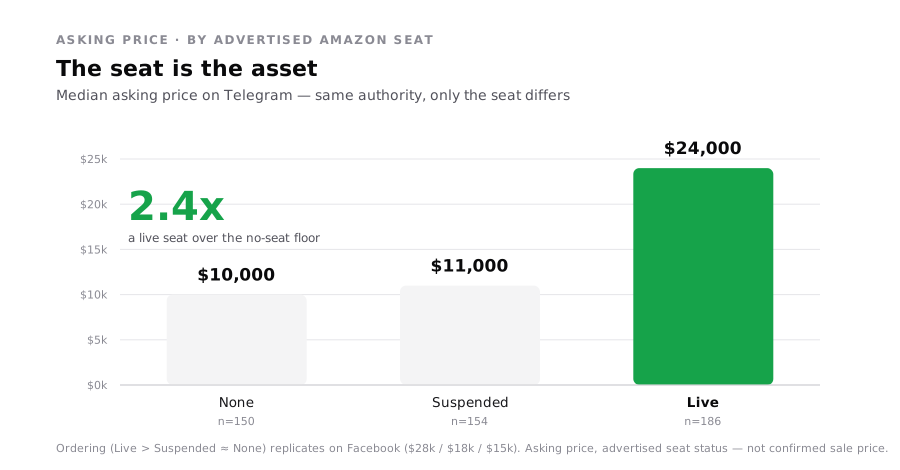
The premium isn't for the truck or the safety record; those come along for free. It's for a standing "yes" from an algorithm that re-checks slowly and is expensive to earn from scratch. (A ready bank account, often advertised alongside, isn't separately priced. It rides with the seat.)
(Asking prices for advertised seat status: what sellers charge, not what buyers paid.)
2. Why you'd never tell FMCSA
Here's the hinge, and it's just how the program works. A declared change of ownership re-triggers vetting, both FMCSA's and the freight program's. That re-check is the one event that voids a live seat. Which means the premium and an honest filing are mutually exclusive: file the transfer, lose the thing you just paid $24,000 for.
So the rational move is to never file. The buyer doesn't start a new carrier and apply for new authority, the slow, uncertain path the whole market exists to skip. They slide into the existing entity: same legal name, same officers, same DOT and MC. The seller hands over the logins and, often, the bank account the program pays into. Nothing about the company's federal identity moves, because moving it is exactly what would kill the deal.
To keep the thing you bought, the sale has to stay invisible to the government.
3. So we checked what actually sold
That's a clean prediction, and unlike listing copy, it's testable. We took every listing our classifier marked sold, resolved it to a carrier, and read FMCSA's change log, the field-by-field record of what each authority has updated over time.
Start with the headline. Of 710 carriers that sold on the grey market, 84.8% never recorded a single change to who owns them: not the company officers, not the legal name, not the DBA. The legal name held in 95.8% of cases; the officers in 90.8%. The transaction happened, the listing says sold, the money moved, and the federal record shows the same company it always was.
The obvious objection is that these are just dead shells, dormant paperwork that wouldn't change anything because nobody's home. They're not. These carriers are demonstrably alive. They just selectively refuse to update the one category that would betray a sale.
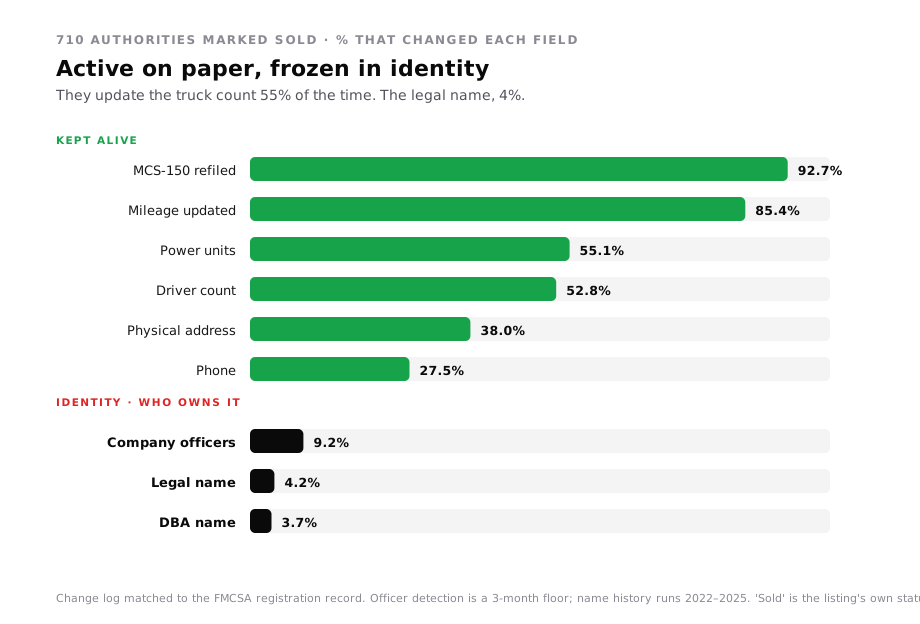
After the sale, 92.7% refile the MCS-150 (the federal "still operating" form), 85.4% update their mileage, 55.1% change their fleet size, 52.8% their driver count, and 38% their physical address. They'll touch the truck count more than half the time. They'll touch the legal name 4% of the time. The record isn't asleep. It's frozen selectively, precisely on the fields that say who's in charge.
And these are real operations, not nameplates: 98% of the sold carriers carry at least one power unit on the current registry (median 2, and 158 of them run five or more, up to a fleet of 341). Real trucks, under a legal name that never changed owner.
Why go to the trouble? Because of what Section 1 showed. Half the sold inventory, 49%, was marketed with a live Amazon seat. The most valuable thing each of these companies owns is bolted to its federal identity. Touch the identity and you break the asset. So you don't touch it.
Anatomy of one. A listing for an Illinois carrier, granted 2022:
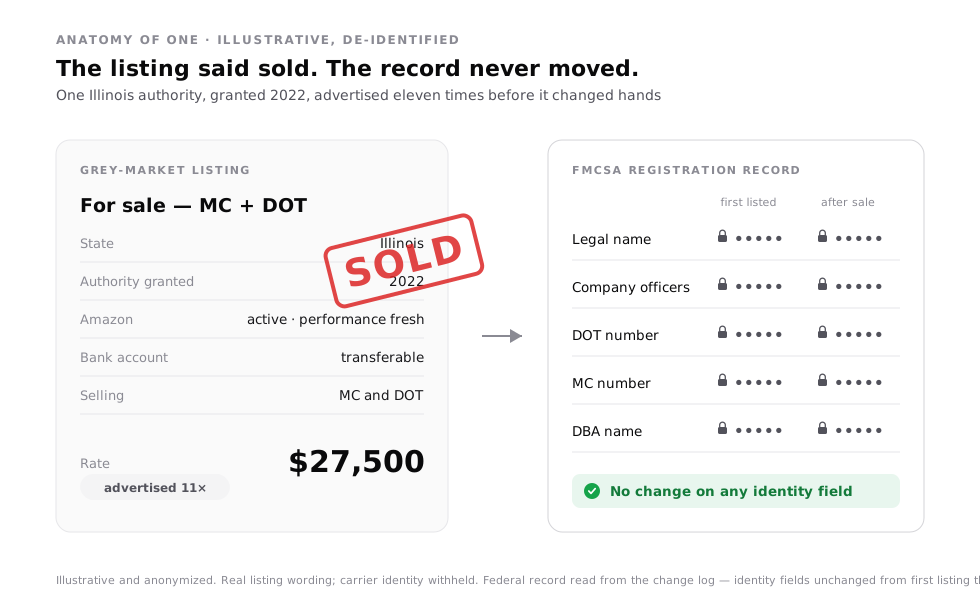
(Two honest limits. "Sold" is the listing's own status, seller-reported and classifier-extracted, not a government transaction record. But that's the whole finding: there is no government record of the sale. And the sold labels are concentrated in two large Telegram resale channels, so the signal leans on their conventions. The freeze itself is read straight from the federal file.)
What you inherit, and what's next
Because nothing is refiled, nothing resets, and that cuts both ways. The buyer doesn't just inherit the live seat; they inherit the authority's entire past, intact. The safety record. The CSA history. The revocations Part 1 documented: 76% of these for-sale carriers carried a prior involuntary revocation, and 45% had been revoked and reinstated at least once. None of it transfers, because nothing transfers. It just continues, now answering to someone new.
The thing being bought and sold here was never really a trucking company. It's the silence in the registration record, the gap between a carrier that looks continuous to the federal government and one that quietly changed hands. We can now put a price on that silence (about $24,000) and show how rarely it breaks (about one time in seven).
What we can't yet do is watch it happen in real time. Part 3: can we catch a specific authority at the moment the money moves and the filing doesn't, and see how long the federal record stays frozen after?
Methodology
- Sold cohort. Listings classified as sold across Telegram and Facebook, resolved to 710 distinct carriers via the contributing-posts to DOT linkage in our for-sale model. Sold status is seller-reported and classifier-extracted, not a government record; the labels concentrate in two resale channels (about 68% and 30% of the marked-sold listings).
- Federal record.
carrier_change_events, a field-level diff of FMCSA registration data. Every timing reference uses the change's effective date, not its load date. - Identity means company officers plus legal name plus DBA name. Officer-change detection covers a 3-month window (the source census carries no officer roster), so officer figures are floors; the identity claim leans on officers-or-name, where the history runs from 2022 and covers about 86% of these sales.
- Power units are read from the current FMCSA registry (a present-day snapshot, not as-of-sale).
- Prices are asking prices for advertised seat status, never confirmed sale prices. Part 1's revocation figures are reproduced as prior context, not re-derived.
- What we claim, and don't. A confirmed-sold listing with no corresponding ownership change on the federal record. We do not benchmark against other carriers. The finding is the absolute fact (the company sold; the record never registered it), not a relative rate.